Blog / Chevrolet Colorado

Chevrolet Colorado WT vs. LT: Same Truck, Different Priorities in Santa Maria, CA

Chevrolet Colorado WT and LT Trims in Santa Maria, CA - Home Motors Chevrolet

A work truck doesn't need leather seats, oversized wheels, or a dozen expensive extras to earn its keep. It needs enough torque to move a loaded trailer, a bed that handles equipment, and controls that make long days easier. That's where the Chevrolet Colorado WT and LT enter the picture. Both deliver the same engine performance, but the LT adds convenience features that could make a difference for drivers around Santa Maria.

WT: Start With the Capability

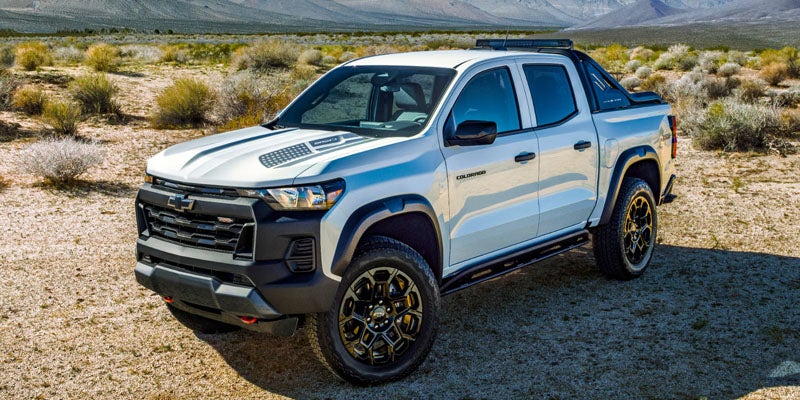
WT stands for Work Truck, and Chevrolet keeps its priorities straightforward. The Colorado WT uses a 2.7L TurboMaxâ„¢ 4-cylinder producing 310 hp and 430 lbs. ft. of torque, paired with an 8-speed automatic transmission. That's substantial output for a midsize pickup, especially when pulling a trailer or carrying equipment through hilly terrain. The WT comes with 17-inch wheels and all-season tires, providing a practical setup for paved roads and jobsite travel. Buyers can choose configurations suited to their traction requirements.

LT: Convenience Without Changing the Engine

The Colorado LT uses the same TurboMaxâ„¢ engine and transmission, so moving up a trim doesn't deliver extra horsepower or torque. Instead, the improvements focus on convenience. Remote start and Keyless Open and Start make entering and preparing the truck easier. The LT also features distinct 17-inch Blade Silver wheels and offers wireless phone charging. These additions won't increase towing capacity, but drivers who spend several hours behind the wheel may appreciate the added comfort and convenience.

Towing Depends on More Than the Badge

Both trims can tow up to 7,700 lbs. when properly equipped. That's enough capacity for many utility trailers, small campers, and recreational equipment, but the maximum figure isn't guaranteed on every truck. Drivetrain, installed equipment, passengers, and cargo all affect real-world capability. Payload deserves equal attention because trailer tongue weight counts against the truck's available carrying capacity. Before choosing either trim, review the door-jamb payload label and the towing specifications for the exact configuration you're considering.

The Tailgate Is Worth a Closer Look

A pickup's bed gets used far more often than its maximum towing rating. Both Colorado trims provide a versatile cargo area for tools, supplies, and outdoor equipment. The LT offers an EZ Lift and Lower tailgate and available StowFlex tailgate storage, which creates a lockable compartment for smaller items. That can be handy for securing straps, gloves, and other equipment. Compare the installed bed features carefully, including available lighting, tie-downs, and protective liners, before deciding which truck offers better value for your workload.

Technology Isn't Reserved for Expensive Trims

One pleasant surprise is how much technology Chevrolet includes in the WT. Both trims feature an 11.3-inch center touchscreen and an 11-inch digital Driver Information Center. Google built-in compatibility supports connected navigation and applications, while wireless Apple CarPlay® and Android Autoâ„¢ provide smartphone integration. Chevy Safety Assist brings driver-assistance technology, including Automatic Emergency Braking and Forward Collision Alert. The LT builds on this foundation with additional convenience equipment, but the WT doesn't feel outdated simply because it's designed for work.

Consider the Driving You'll Do Most

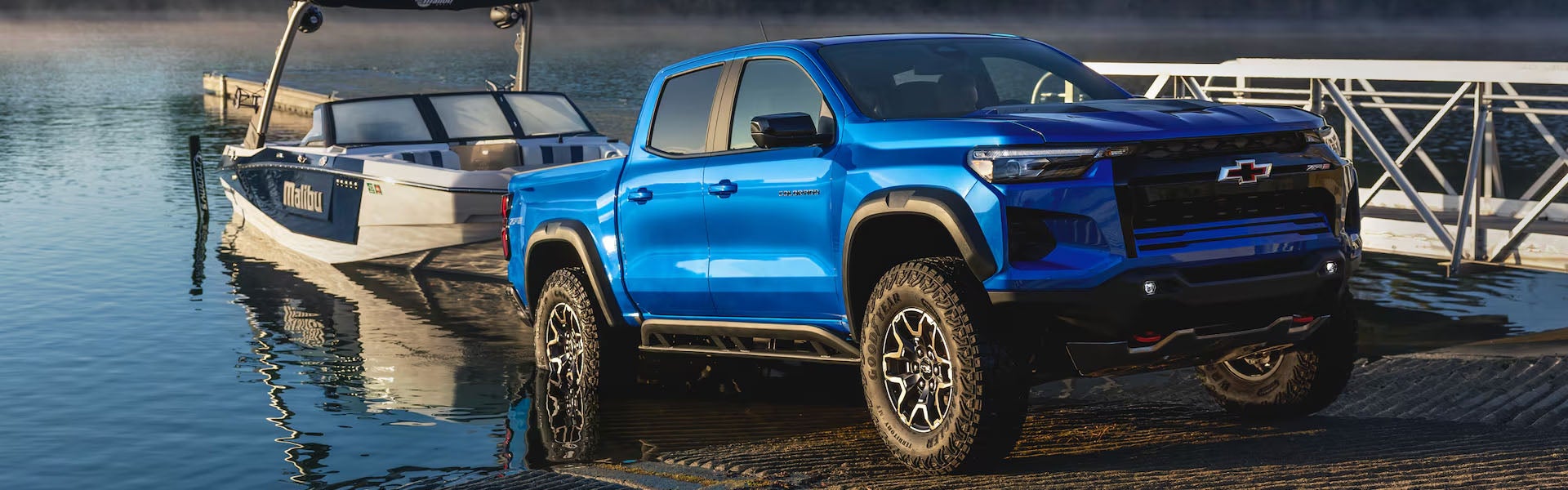
The WT makes a strong case for contractors, fleet operators, and buyers who want capable equipment without unnecessary extras. The LT suits drivers who use their Colorado for work during the week and personal travel afterward. Neither trim is designed to match the specialized off-road hardware of the Trail Boss or ZR2. If rough trails are a regular destination, those models deserve consideration. For ordinary hauling, commuting, and weekend towing, the WT and LT cover a considerable range of needs.

Which Colorado Belongs in Your Driveway?

The important distinction isn't engine performance; it's how much convenience you want alongside that capability. WT delivers the essential truck equipment, while LT adds features that can make ownership easier. Visit Home Motors Chevrolet to compare all-new available Colorado WT and LT models, review payload and towing ratings, and inspect the bed equipment firsthand. Schedule a test drive online today. A few miles behind the wheel can reveal which configuration fits your work and driving habits.

Posted in:

Related Posts

Chevrolet Tire Rotation in Santa Maria, CA - Home Motors Chevrolet

Chevrolet Tire Rotation Benefits Every Driver Should Know

Routine maintenance protects your Chevrolet investment, and tire rotation sits near the top of that list. Understanding Chevrolet tire rotation benefits helps you make smarter decisions about vehicle upkeep. If you commute daily in a Trax around Santa Maria, CA, the team at Home Motors Chevrolet is ready to assist you. Reach out to our service center today to learn more about maximizing your tread life. What Is Tire Rotation and Why Does It Matter? Tire rotation involves moving each tire to a different position at regular intervals. Front tires handle steering, braking, and power delivery. Without rotation, front tires wear down significantly faster than the rear set, causing uneven tread depth. Chevrolet recommends rotating tires every 7,500 miles, aligning with the oil change interval on many models. This schedule maintains consistent wear patterns and maximizes tire life. Longer Tire Life and Better Performance Extended tire life serves as a highly practical Chevrolet tire rotation benefit. Wearing all four tires evenly allows you to replace the full set together instead of buying two tires prematurely. Even tread depth also improves handling and braking performance. Tires with matched tread depth grip the road predictably during sudden stops or wet weather. On trucks like the Silverado HD carrying heavy payloads, consistent tread wear maintains stable and controlled braking. Protecting Your Warranty and Catching Problems Early Many tire manufacturers require documented rotation records to honor tread-life warranties. Skipping rotations can void that coverage. Maintaining your rotation schedule provides documented proof of proper maintenance. A rotation appointment also gives a technician the chance to inspect each tire closely. Technicians spot uneven wear patterns signaling a wheel alignment problem, check for debris, measure tread depth, and inspect brake components. Finding a thin brake pad or a slow leak is much easier during a scheduled rotation than during a roadside emergency. How Rotation Patterns Work on Different Chevrolet Models The correct rotation pattern depends on the drivetrain of your Chevrolet. Front-wheel-drive models like the Trax and Equinox typically use a forward cross pattern. The front tires move straight back, and the rear tires cross to opposite front positions. Rear-wheel-drive trucks and SUVs often use a rearward cross or X-pattern. All-wheel-drive models such as the Traverse or Equinox require all four tires to stay closely matched in tread depth, sometimes within a few thirty-seconds of an ". This protects the transfer case and differentials from unnecessary strain. Regular rotation maintains this critical balance. Visit Home Motors Chevrolet for Expert Tire Service Routine tire rotation extends tire life, improves safety, and keeps your Chevrolet running properly. Chevrolet tire rotation benefits add up over time through better handling, longer tread life, and early detection of brake issues. Drivers throughout Santa Maria, CA, can count on the certified service team at Home Motors Chevrolet to keep their vehicles in top shape. Schedule your next appointment and let the experts handle the details.

Chevrolet Work Trucks in Santa Maria, CA - Home Motors Chevrolet

Chevrolet Work Trucks: Matching the Truck to the Job in Santa Maria

A work truck is fundamentally a tool, and tools become expensive when they're badly matched to the task. Chevrolet gives contractors, fleet operators, and business owners in Santa Maria, CA a broad range of choices, from the midsize Colorado and Silverado 1500 to Silverado HD, Silverado EV, chassis cab models, and commercial vans. The important part isn't simply buying the truck with the biggest number attached to it. It's identifying the load, trailer, route, and body configuration first, then selecting the Chevrolet that has the hardware to handle it. Silverado 1500 Covers a Wide Range of Work The 2026 Silverado 1500 offers up to 13,300 lbs. of towing capacity and 2,260 lbs. of payload capacity when properly configured. Its 4-engine lineup gives businesses considerable room to tailor the truck. The TurboMax™ produces 310 hp and 430 lbs. ft. of torque, while the 5.3L EcoTec3 V8 delivers 355 hp and 383 lbs. ft. of torque. The available 6.2L EcoTec3 V8 raises output to 420 hp and 460 lbs. ft. of torque, while the Duramax® 3.0L Turbo-Diesel produces 305 hp and 495 lbs. ft. of torque. Properly configured, that diesel provides the Silverado 1500's 13,300-lb. maximum towing figure. For many businesses, that's enough truck without stepping into HD dimensions and hardware. Silverado HD Takes Over When the Loads Get Serious The 2026 Silverado 2500 HD and 3500 HD are built around heavier work. Both offer a standard 6.6L gas V8 producing 401 hp and 464 lbs. ft. of torque or an available Duramax® 6.6L Turbo-Diesel V8 with 470 hp and 975 lbs. ft. of torque. Both engines pair with an Allison® 10-speed automatic transmission. Properly configured, Silverado 2500 HD reaches 22,420 lbs. of towing capacity, while Silverado 3500 HD can reach 36,000 lbs. Across the Silverado HD lineup, maximum available payload reaches 7,237 lbs. Those figures are configuration-dependent, which makes choosing the correct cab, drivetrain, hitch, and equipment every bit as important as choosing the engine. Colorado Handles Jobs That Don't Need a Full-Size Truck Not every crew needs an HD pickup occupying the parking lot. The 2026 Colorado uses a 2.7L TurboMax™ producing 310 hp and 430 lbs. ft. of torque, with up to 7,700 lbs. of towing capacity and 1,710 lbs. of payload capacity when properly configured. Its midsize footprint makes it an interesting choice for businesses that need truck capability but regularly work in tighter spaces. Chevrolet also offers Silverado chassis cab configurations for specialized bodies and upfits, while Express Cargo and Cutaway vans serve delivery, service, transportation, and other commercial operations. Silverado EV Adds a Different Kind of Work Truck The 2026 Silverado EV brings battery-electric propulsion to Chevrolet's full-size truck range, with a GM-estimated driving range of up to 478 miles depending on configuration and maximum available towing of 12,500 lbs. Its suitability depends heavily on how the truck works. Businesses running predictable routes with reliable charging at a home or facility can evaluate it differently from crews covering irregular distances or operating far from charging infrastructure. That's not an argument for or against electric power; it's simply another configuration decision dictated by the job. Trailering Technology Helps Manage the Hardware Chevrolet's truck technology becomes especially relevant once a trailer is attached. Silverado 1500 can offer up to 8 cameras providing as many as 14 views, and Silverado HD offers up to 14 camera views as well. Available features such as the In-Vehicle Trailering App and Hitch View can assist with trailer connection and management. They don't increase the truck's physical towing rating, but they can give the driver more information when hitching, maneuvering, and managing a trailer. Find Chevrolet Work Trucks at Home Motors Chevrolet Home Motors Chevrolet in Santa Maria, CA can help businesses compare Colorado, Silverado 1500, Silverado HD, Silverado EV, vans, and commercial chassis configurations based on the work each vehicle needs to perform. Explore available Chevrolet work trucks and commercial vehicles to match the powertrain, towing rating, payload capacity, and body configuration to your operation before putting the truck to work. Schedule a test drive online today!

Chevrolet Trax 1RS and ACTIV Trim Levels in Santa Maria, CA - Home Motors Chevrolet

What's the Difference Between Chevrolet Trax 1RS and ACTIV Trim Levels?

If you've been looking at the 2026 Chevrolet Trax, you've probably noticed that there are five available trims including the 1RS and the ACTIV. Both offer distinct personalities and real visual appeal, so understanding what's the difference between Chevrolet Trax 1RS and ACTIV trim levels is a great place to start before heading to the lot in Santa Maria, CA. The good news is that both trims share the same capable foundation: a 1.2L Turbo 3-cylinder ECOTEC engine producing 137 hp and 162 lb-ft of torque, standard Chevy Safety Assist, wireless Apple CarPlay® and wireless Android Auto™ compatibility, and seating for 5 adults. Where they differ is in attitude, looks, and the type of driver they're designed for. Chevrolet Trax 1RS: The Sporty Standout If you're drawn to bold, performance-inspired design, you should check out the 1RS, it leans into sport-forward style across the board. On the outside, the 1RS features RS badging with a unique grille and black bowtie emblems, giving it a sleek look. It rides on 18-in machined two-tone wheels that add visual punch without feeling overdone. Step inside and you'll notice red interior accents that carry the sporty theme throughout the cabin. The 1RS also includes a race-inspired flat-bottom steering wheel, which makes every drive feel a little more fun. It's a trim that communicates style and confidence from the moment you pull up. Chevrolet Trax ACTIV: Bold Goes Its Own Way The ACTIV trim takes a different approach - one that's more rugged and outdoorsy in character. Exterior details include a black grille with Titanium chrome accents, 18-in Black-painted aluminum wheels, and ACTIV badging that signals this SUV means business. Inside, you'll find unique interior accents with a yellow color scheme that brings energy and personality to the cabin. The ACTIV is designed for drivers who want a compact SUV with a standout presence if they're driving through town or heading somewhere with a little more adventure on the agenda. What They Share: Safety and Technology No matter if you choose the 1RS or the ACTIV, both trims come equipped with standard Chevy Safety Assist, which includes Automatic Emergency Braking, Front Pedestrian Braking, Lane Keep Assist with Lane Departure Warning, Forward Collision Alert, IntelliBeam® High Beam Assist, and a Following Distance Indicator. Both trims also offer the same capable ECOTEC engine and front-wheel drive configuration. So, while the question of what's the difference between Chevrolet Trax 1RS and ACTIV trim levels comes down largely to style and personality, you're not giving anything up in terms of safety or performance no matter which direction you go. Available technology upgrades - including a wireless charging pad, a built-in Wi-Fi hotspot, and an available 11-in HD touchscreen - can be added to both trims depending on the package you select. With up to 54 cu ft of maximum cargo space when the rear seats are folded, practicality is never a concern on either trim. Which 2026 Trax Trim Is Right for You? If you prefer sporty interior accents, a race-inspired flat-bottom steering wheel, and a look that feels performance-oriented, the 1RS is likely your match. If you want something with rugged exterior styling, a bolder color scheme, and a personality that leans adventurous, the ACTIV delivers. Understanding what's the difference between Chevrolet Trax 1RS and ACTIV trim levels ultimately comes down to which version speaks to you. Both are well-equipped, enjoyable to drive, and backed by the same reassuring safety technology. Stop by Home Motors Chevrolet or view our online Chevrolet Trax inventory to explore both trims and find the one that fits your life.